


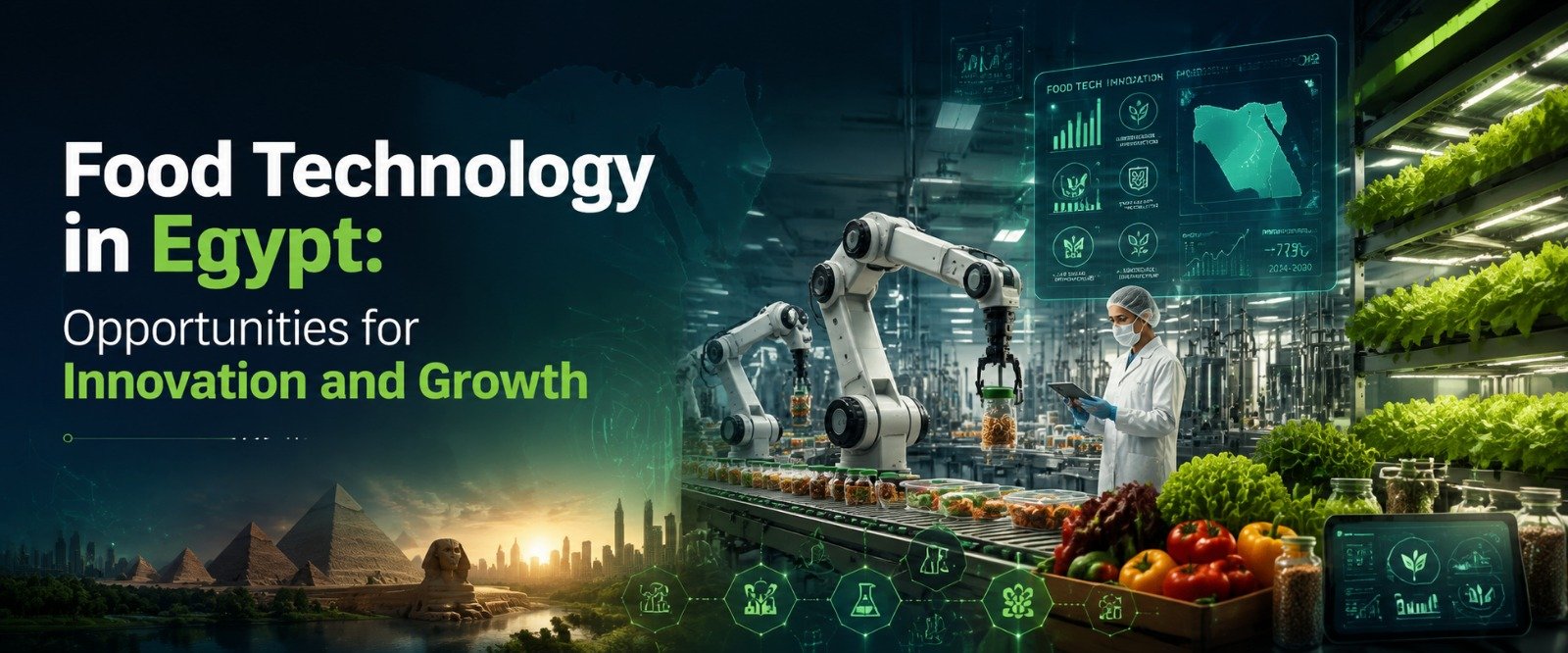
Can food tech in Egypt change the future of the food industry?
Can food tech in Egypt become one of the strongest drivers of innovation and growth in the coming years? The answer is yes. Egypt has a large population, a growing demand for safe and affordable food, strong agricultural roots, and a fast-developing startup ecosystem. These factors create a real opportunity for food technology to improve how food is produced, stored, transported, monitored, and consumed.
Today, food technology is no longer limited to food processing or packaging. It includes digital platforms, artificial intelligence, data analytics, smart farming, cold-chain solutions, food safety systems, and waste reduction technologies. In Egypt, these solutions are becoming increasingly important because the country faces real challenges related to food loss, supply-chain efficiency, climate change, food safety, and the need to produce more with fewer resources.
What does food technology mean for Egypt?
Food technology refers to the use of science, engineering, and digital tools to improve the food value chain from farm to table. In the Egyptian market, this includes agricultural technology, food processing innovation, smart logistics, digital marketplaces, food quality control, traceability, and solutions that reduce food waste.
For Egypt, the value of food technology is practical. It can help farmers access better information, support companies in managing supply chains, reduce the gap between producers and buyers, and improve the safety and quality of food products. This makes food tech in Egypt not only a business opportunity, but also an important tool for food security and economic development.
Why food tech in Egypt is becoming more important?
The need for food tech in Egypt is driven by several real market factors. One of the biggest challenges is food loss and waste. FAO–related studies have highlighted that Egypt loses and wastes significant amounts of food every year, especially in perishable products such as fruits and vegetables. This creates pressure on farmers, traders, retailers, consumers, and the wider economy.
Technology can help solve part of this problem by improving forecasting, storage, transportation, quality monitoring, and distribution. For example, digital platforms can connect farmers directly with buyers, reduce unnecessary intermediaries, and make the supply chain more transparent. Cold-chain and logistics technologies can also help preserve fresh products for longer periods and reduce losses during transportation.
Food technology and Egypt’s supply-chain transformation?
One of the strongest opportunities for food technology in Egypt is supply-chain transformation. Traditional food supply chains often include many intermediaries, which may increase costs, reduce transparency, and make it harder for farmers to receive fair value for their products.
Technology-based food platforms can make this process more efficient. A real example is FreshSource, an Egyptian agri-tech startup that uses data and technology to connect fresh fruit and vegetable farmers with business buyers. The company operates across several Egyptian cities and provides services across the fresh food value chain, including transportation, cold storage, and packaging. This type of model shows how food tech in Egypt can move from being an idea to a practical solution that improves daily operations in the market.
Food tech in Egypt and food waste reduction?
Food waste is one of the most urgent areas where food tech in Egypt can create measurable impact. When food is lost after harvest or wasted by consumers, restaurants, and retailers, the result is not only financial loss. It also means wasted water, land, energy, labor, and transportation costs.
Food technology can reduce waste through demand forecasting, inventory management, smart storage, digital redistribution platforms, and AI-powered tools that help retailers and food service providers plan better. These solutions are especially important for perishable food products, where timing, temperature, and logistics can make a major difference.
In Egypt, food waste reduction is not just an environmental goal. It is directly connected to food security, household spending, and the ability to build a more efficient food system.
Digital agriculture as part of food technology in Egypt?
Digital agriculture is an important part of food technology because it supports the earliest stage of the food chain: production. Egypt has already seen initiatives focused on using digital tools to improve agricultural extension and support farmers with information.
Mobile applications, digital advisory services, weather-based recommendations, and smart irrigation tools can help farmers make better decisions about crops, water use, pests, and productivity. This is particularly important in Egypt because agriculture is highly affected by water availability, climate pressures, and the need to improve productivity from limited resources.
By giving farmers access to practical information, food technology can help improve both production quality and market readiness.
AI and food technology in Egypt?
Artificial intelligence is becoming one of the most promising areas in food technology. In Egypt, AI can support food security through crop yield prediction, food safety monitoring, supply-chain optimization, demand forecasting, and quality control.
AI-powered tools can analyze data from weather, soil, market demand, transportation, and historical production patterns. This helps farmers, companies, and policymakers make more accurate decisions. In food processing and retail, AI can also help detect quality problems, reduce waste, and improve stock management.
This does not mean that AI will replace traditional expertise. Instead, it can support farmers, food producers, logistics companies, and regulators with better insights and faster decision-making.
Food technology and food safety in Egypt?
Food safety is another important opportunity for food tech in Egypt. As consumer awareness grows and food businesses become more competitive, companies need stronger systems to monitor quality, trace products, and meet safety standards.
Food technology can support this through digital tracking systems, automated inspection tools, better data management, and traceability solutions. These tools make it easier to follow a product’s journey from production to storage, transportation, and final sale.
For food companies, this creates trust. For consumers, it provides more confidence. For regulators, it supports better monitoring and faster response when problems appear in the supply chain.
Opportunities for startups in food tech in Egypt?
Startups have a major role to play in developing food tech in Egypt. The market has many gaps that can be solved through innovation, especially in logistics, farm-to-business platforms, cloud kitchens, food waste reduction, smart packaging, nutrition apps, cold-chain solutions, and food safety technologies.
Egyptian startups can also benefit from the country’s strategic location, large consumer market, and strong connection to regional markets in Africa and the Middle East. A startup that solves a real food-system problem in Egypt may have the potential to scale into other markets facing similar challenges.
The most promising startups will be those that solve practical problems, not just those that offer attractive digital interfaces. In the food industry, success depends on execution, trust, logistics, data accuracy, and the ability to reduce costs or improve quality.
Challenges facing food technology in Egypt?
Although the opportunity is strong, food technology in Egypt still faces challenges. These include fragmented supply chains, limited digital adoption among some small producers, infrastructure gaps, financing needs, regulatory complexity, and the difficulty of scaling logistics-heavy businesses.
Another challenge is data. Many food-tech solutions depend on accurate data about farms, stock levels, pricing, demand, transportation, and waste. Without reliable data, it becomes harder for technology companies to deliver strong results.
For food tech in Egypt to grow, collaboration is needed between startups, government entities, investors, universities, food producers, retailers, and logistics providers.
The future of food tech in Egypt?
The future of food tech in Egypt is promising because the need is real and the market is large. Technology can help Egypt reduce food waste, improve supply-chain efficiency, support food safety, increase agricultural productivity, and create new business models across the food industry.
The next stage will likely be shaped by startups that combine technology with deep understanding of the local market. Solutions that work in Egypt must be practical, affordable, scalable, and suitable for the realities of farmers, food companies, retailers, and consumers.
In conclusion, food technology is not just a trend. It is a necessary direction for Egypt’s food industry. With the right investment, partnerships, and innovation ecosystem, food tech in Egypt can become a powerful force for economic growth, food security, and sustainable development.
Loqma, the investment arm of 7D Hub, supports the growth of Egypt’s food innovation ecosystem by empowering startups and ventures that develop scalable Food Tech Solutions tailored to real market needs. This support helps entrepreneurs transform innovative ideas into sustainable business models, improve production efficiency, enhance product quality, reduce food waste, and strengthen supply chains. To learn more about the role of entrepreneurship in advancing this sector, read: The Role of Startups in Developing Food Tech Solutions in Egypt?