


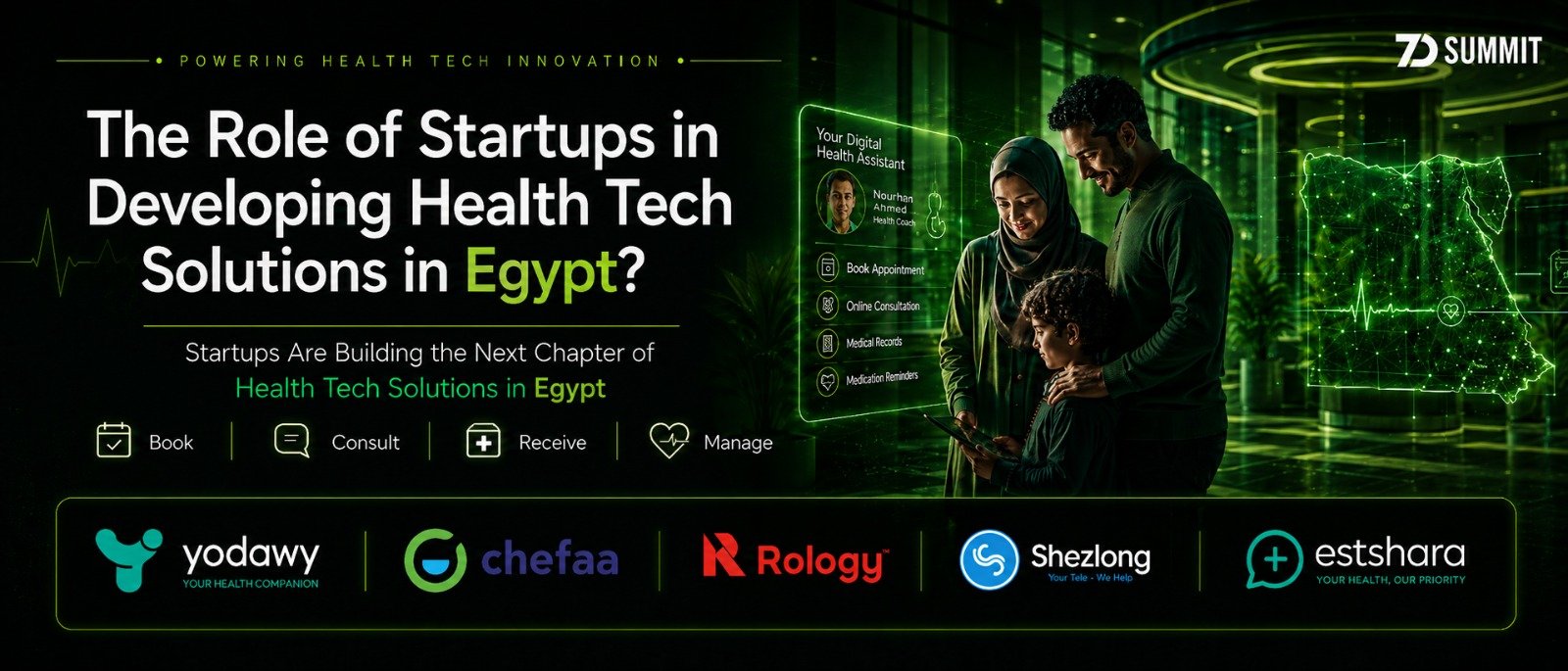
How can startups change the way people receive healthcare in Egypt? The answer lies in their ability to move fast, understand real patient problems, and build digital tools that make healthcare more accessible, affordable, and efficient. In a country with a large population, growing demand for medical services, and increasing digital adoption, startups are becoming one of the strongest drivers of Health Tech Solutions in Egypt. They are not only creating apps or platforms; they are building new models for doctor booking, online consultations, digital pharmacies, remote diagnostics, mental health support, electronic medical records, and smarter patient care.
Health Tech Solutions in Egypt: A New Chapter for Healthcare?
Health Tech Solutions in Egypt represent the intersection between healthcare and technology. This includes digital platforms, mobile applications, artificial intelligence tools, telemedicine, e-pharmacy services, remote diagnostics, digital records, and smart healthcare systems.
For years, healthcare in Egypt has faced challenges such as long waiting times, difficulty accessing specialists, fragmented medical records, pressure on hospitals, and unequal access between large cities and smaller governorates. Startups have entered this space with a practical mindset: identify one clear problem, build a digital solution around it, and scale it to serve more patients and providers.
This is why health tech startups are becoming essential players in the transformation of healthcare. They are making the patient journey easier, helping doctors work more efficiently, and creating new business models that support healthcare innovation.
Why Health Tech Solutions in Egypt Matter Today?
The demand for Health Tech Solutions in Egypt is growing because patients now expect faster, more convenient, and more transparent healthcare experiences. People want to book a doctor without wasting time, receive medication without visiting several pharmacies, consult a specialist remotely, access their medical history easily, and manage chronic conditions with less stress.
Technology helps solve many of these needs. A digital platform can connect patients with doctors. A pharmacy app can deliver medication and support monthly refills. A teleconsultation service can offer medical guidance without physical travel. A teleradiology platform can connect hospitals with remote radiologists and reduce reporting delays.
This shift is not only about convenience. It is also about improving healthcare access, reducing inefficiencies, and supporting better decision-making through data. When used responsibly, healthcare technology can improve the quality of care and make the system more patient-centered.
Health Tech Startups as Problem Solvers?
Health Tech startups usually succeed when they focus on real problems inside the healthcare journey. In Egypt, these problems can appear in many forms: a patient cannot find the right doctor, a pharmacy does not have a needed medicine, a hospital lacks enough specialists, a patient loses medical records, or someone needs mental health support but fears stigma.
Startups respond by creating focused solutions. Some build doctor-booking platforms. Others create e-pharmacy networks, online therapy services, digital insurance tools, or cloud-based diagnostic systems. Their strength comes from speed, flexibility, and the ability to test services directly with users.
Unlike large institutions that may take years to change systems, startups can adapt quickly. They can launch a service, collect feedback, improve the product, and expand to new cities or new patient segments. This is one of the reasons they play a major role in healthtech innovation.
Healthy Tech Solutions in Egypt and Healthcare Innovation?
Healthcare innovation in Egypt is not only about advanced medical devices. It is also about redesigning the way healthcare is delivered. A simple booking system can be innovative if it reduces waiting time. A medicine delivery platform can be innovative if it helps chronic patients receive treatment on schedule. A digital medical record can be innovative if it prevents repeated tests and gives patients control over their health data.
Startups bring this type of innovation because they understand everyday friction points. They often begin with one pain point and build a product around it. As the product grows, it becomes part of a larger digital healthcare ecosystem.
This is how Healthy Tech Solutions in Egypt can gradually transform the system: one problem, one product, and one improved patient experience at a time.
The Startup Ecosystem in Egypt and Its Role in HealthTech?
The startup ecosystem in Egypt has become more active over recent years, supported by accelerators, venture capital, entrepreneurship programs, universities, innovation hubs, and a growing community of founders. This ecosystem creates an environment where healthtech ideas can move from concept to market.
For healthtech startups, the ecosystem is especially important because healthcare is a complex sector. Startups need more than developers; they need doctors, pharmacists, hospitals, insurers, regulators, data specialists, and investors. When these parties collaborate, startups can build safer and more practical solutions.
Egypt’s large population also gives startups a strong testing ground. If a healthtech solution works in Egypt, it may have the potential to scale to other markets in the Middle East and Africa that face similar healthcare access challenges.
Example 1: Vezeeta and Digital Doctor Booking?
Vezeeta is one of the most recognized examples of health tech startups that began by solving a very clear patient problem: finding and booking the right doctor. The platform helped patients search for doctors, compare options, book appointments, and review medical services in a more transparent way.
The case of Vezeeta shows how a startup can change patient behavior. Instead of relying only on personal recommendations or phone calls, users can make healthcare decisions through a digital platform. Over time, Vezeeta expanded beyond booking into broader digital healthcare services such as teleconsultation and medicine delivery.
Vezeeta’s condition today can be described as a mature digital health platform compared with many early-stage startups. It has moved from a simple marketplace model toward a wider healthcare technology ecosystem. Its journey proves that Healthy Tech Solutions in Egypt can grow from one focused service into a broader healthcare platform.
Example 2: Yodawy and the Digital Pharmacy Model?
Yodawy is another important example of healthtech innovation in Egypt. It focuses on making access to medication easier and more organized. The company built a healthcare platform that supports medication ordering, pharmacy delivery, and chronic prescription refills.
Yodawy’s role is important because medication access is a daily challenge for many patients, especially those with chronic conditions. Patients may need regular refills, insurance approvals, or access to specific medicines. By using technology, Yodawy helps connect patients, pharmacies, insurers, and healthcare providers in a more efficient way.
The company’s current condition reflects a strong position in the e-pharmacy and medication access space. It is not only a delivery service; it is part of a larger healthcare infrastructure that can support patients who need ongoing medication management.
Example 3: Chefaa and Chronic Medication Support?
Chefaa is a digital pharmacy platform that focuses strongly on medicine delivery and recurring prescription needs. Its model is particularly relevant for patients who need medication regularly, such as people managing diabetes, blood pressure, heart conditions, or other chronic diseases.
The value of Chefaa lies in reducing the stress of repeated pharmacy visits. For chronic patients, missing medication can affect health outcomes. A platform that supports refills, scheduling, and delivery can make treatment easier to maintain.
Chefaa’s condition shows how health tech startups can build patient-centered services around recurring needs. It also highlights the importance of convenience in healthcare. When a startup makes a routine health task easier, it can improve adherence and patient satisfaction.
Example 4: Rology and Remote Radiology?
Rology represents a more specialized type of Healthy Tech Solutions in Egypt. Instead of focusing on direct consumer services, it works in the diagnostic imaging space through teleradiology. Its platform connects hospitals and medical centers with remote radiologists who can review scans and provide reports.
This is a powerful example of healthcare innovation because radiology depends on specialist availability. In many regions, there may be a shortage of radiologists or long delays in receiving reports. A cloud-based teleradiology platform can help reduce these gaps by allowing scans to be interpreted remotely.
Rology’s condition can be described as a specialized B2B healthtech company. Its solution serves hospitals and healthcare providers rather than only individual patients. This makes it an important example of how startups can support the healthcare system from behind the scenes, improving speed and diagnostic capacity.
Example 5: Shezlong and Online Mental Health Support?
Shezlong is a strong example of a startup addressing mental health access. It provides online therapy and connects users with mental health professionals through a digital platform.
This is important in Egypt and the wider region because mental health support can face barriers such as stigma, cost, distance, and lack of awareness. Online therapy can make the first step easier for many people because it offers privacy, flexibility, and access from home.
Shezlong’s condition reflects the growth of digital mental healthcare. It shows that healthtech innovation is not limited to physical health or hospital services. Healthy Tech Solutions in Egypt can also support emotional wellbeing, therapy access, and mental health awareness.
Example 6: Bypa-ss and Digital Medical Records?
Bypa-ss, through its HealthTag solution, focuses on digital health records and healthcare information exchange. This type of solution addresses a major challenge in healthcare: fragmented patient data.
Many patients visit different doctors, labs, hospitals, and pharmacies, but their medical information is often scattered. This can lead to repeated tests, incomplete history, and slower medical decisions. Digital health records help organize information and give patients better control over their medical journey.
Bypa-ss represents an important category of healthcare technology because it works on infrastructure rather than only front-end services. Its condition shows the importance of building the digital foundation needed for the Future of Healthcare in Egypt.
Example 7: Estshara and Telemedicine Access?
Estshara is a telehealth platform that provides online medical consultations. It helps patients access doctors remotely through digital channels, which can be useful for quick medical advice, follow-up consultations, and non-emergency cases.
The value of Estshara lies in reducing the distance between patients and doctors. In a busy healthcare system, telemedicine can save time, reduce unnecessary clinic visits, and provide support to people who need faster access to medical guidance.
Estshara’s condition reflects the growing acceptance of remote healthcare in Egypt. It is part of the shift toward more flexible and accessible healthcare delivery models.
Healthy Tech Solutions in Egypt and the Future of Healthcare in Egypt?
The Future of Healthcare in Egypt will likely depend on a hybrid model that combines traditional medical care with digital tools. Hospitals and clinics will remain essential, but technology will support prevention, diagnosis, follow-up, medication management, mental health, and patient education.
Healthy Tech Solutions in Egypt can help create this future by improving four main areas:
First, access. Digital platforms can help patients reach doctors, pharmacies, therapists, and specialists more easily.
Second, efficiency. Technology can reduce waiting times, repeated paperwork, and unnecessary visits.
Third, data. Digital records, remote monitoring, and analytics can help doctors make better decisions.
Fourth, personalization. Health apps and connected platforms can support care that is more tailored to each patient’s needs.
This does not mean every healthcare problem can be solved by an app. Healthcare requires trust, regulation, medical expertise, and patient safety. But startups can provide tools that make the system smarter and more responsive.
Challenges Facing Health Tech Startups in Egypt?
Despite the opportunities, health tech startups in Egypt face several challenges. The first challenge is trust. Healthcare is sensitive, and patients need to trust that digital platforms are safe, accurate, and reliable.
The second challenge is regulation. Startups working in telemedicine, e-pharmacy, health records, or diagnostics need to operate within clear legal and medical frameworks.
The third challenge is integration. A healthtech solution becomes more powerful when it integrates with hospitals, clinics, labs, pharmacies, insurers, and payment systems. Without integration, the patient experience can remain fragmented.
The fourth challenge is affordability. Many users may like digital healthcare services, but pricing must match the local market and the needs of different income groups.
The fifth challenge is data privacy. Health data is highly sensitive, so startups must protect patient information through strong security systems and responsible data practices.
Opportunities for More HealthTech Innovation?
There are still many opportunities for healthtech innovation in Egypt. Startups can build solutions for chronic disease management, maternal health, elderly care, home nursing, AI-supported diagnosis, medical education, insurance automation, hospital management, preventive health, and rural healthcare access.
There is also a strong opportunity to create Arabic-first health platforms that fit local culture, language, and patient behavior. Many global healthtech tools are not designed around the Egyptian user experience. Local startups can fill this gap by building solutions that understand how people actually search for care, communicate with doctors, buy medicine, and manage family health.
The next generation of Healthy Tech Solutions in Egypt may also include more AI tools, predictive analytics, wearable device integration, and smart hospital systems.
Why Events and Summits Matter for Healthy Tech Solutions in Egypt?
Innovation events, conferences, and summits can play a major role in supporting Healthy Tech Solutions in Egypt. They create a space where startups can meet doctors, investors, hospitals, universities, and technology experts.
For a sector like healthtech, this type of connection is essential. A founder may have a strong idea, but they need medical validation, technical support, funding, partnerships, and real market feedback. Events can help shorten the distance between ideas and implementation.
This is why platforms such as 7D Summit Delta can become important for the healthtech conversation. They can highlight local innovators, discuss real healthcare challenges, and encourage collaboration between the technology and healthcare sectors.
Conclusion
Startups are playing a vital role in developing Healthy Tech Solutions in Egypt by solving real problems in doctor booking, medication access, remote consultations, mental health support, radiology, and digital medical records. Companies such as Vezeeta, Yodawy, Chefaa, Rology, Shezlong, Bypa-ss, and Estshara show that health tech startups can support both patients and healthcare providers in practical ways.
The growth of healthcare innovation in Egypt depends on collaboration between startups, doctors, hospitals, pharmacies, insurers, investors, regulators, and technology experts. As the startup ecosystem in Egypt becomes stronger, the country has a real opportunity to build smarter, more accessible, and more patient-centered healthcare solutions.
The Future of Healthcare in Egypt will not be shaped by technology alone, but by the people who use technology to solve meaningful health problems. This is where healthtech innovation becomes truly powerful: when it improves lives, supports medical professionals, and makes quality healthcare easier to reach.
7D Summit Delta plays an important role in supporting the growth of Health Tech Solutions in Egypt by creating a platform that connects startups, entrepreneurs, healthcare professionals, investors, and technology leaders. Through its focus on innovation, digital transformation, and knowledge sharing, the summit helps highlight the potential of health tech startups in improving healthcare access, enhancing patient experience, and encouraging smarter medical solutions across Egypt. By supporting dialogue, partnerships, and new business opportunities, 7D Summit Delta contributes to strengthening Egypt’s position as a promising hub for healthcare innovation and digital health development.